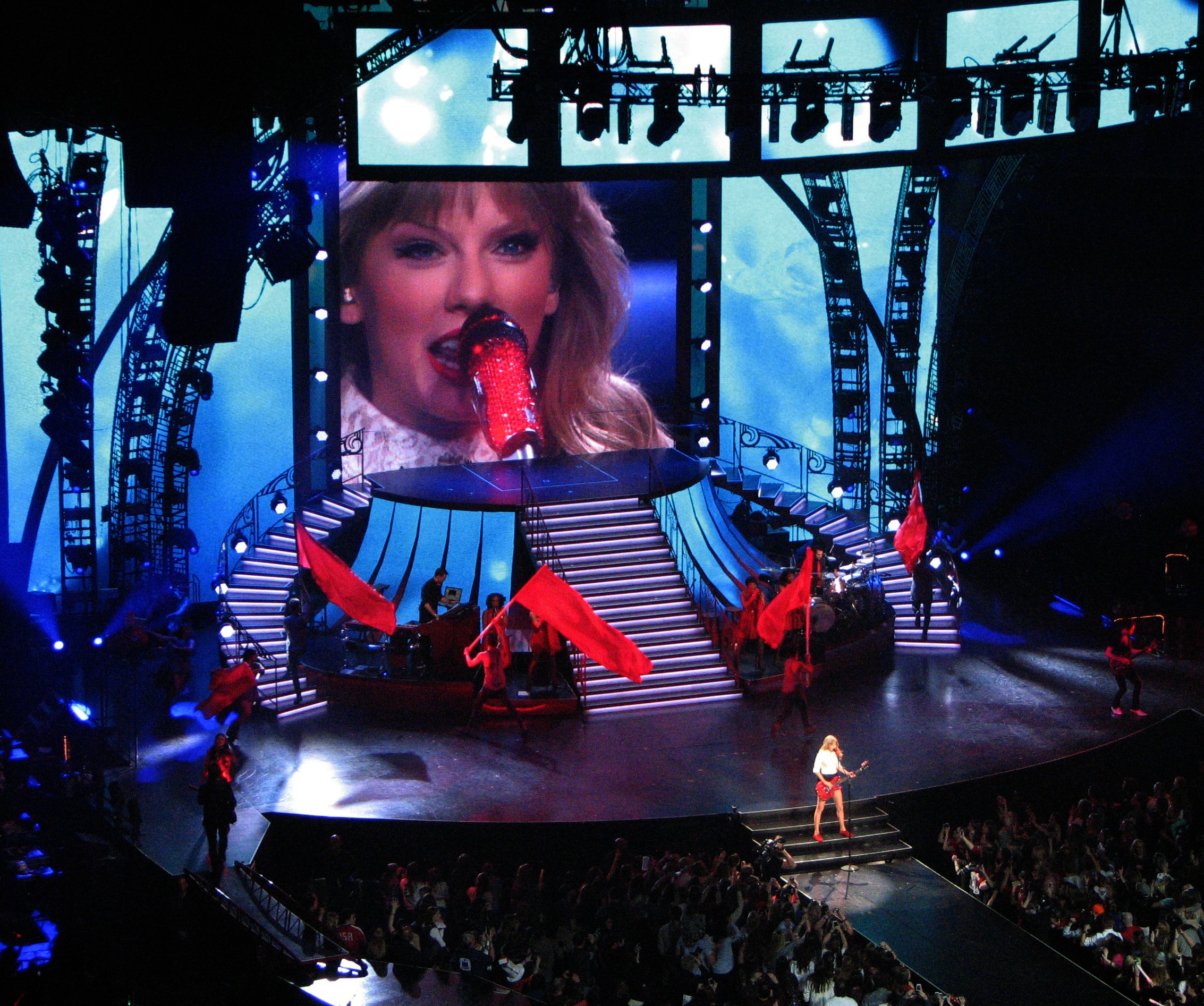
Taylor Swift’s Late-Night NYC Studio Runs Trigger New Era Rumors
By Hot Club Tracks - Published on: 2026-03-05
A Familiar Pattern Is Back
For fans who track pop culture like a sport, the past two weeks have felt unusually familiar. Taylor Swift has reportedly been in and out of a private New York recording compound after midnight, often with minimal security fanfare and no visible social media trail. In isolation, that would be normal for any artist. What has people talking is the consistency. The same hours. Similar arrival windows. The same few collaborators seen nearby. In an era where celebrities are documented constantly, repetition like this stands out fast.
The conversation has moved beyond generic “new music soon” chatter. Fans are now building detailed timelines and cross-referencing outfit colors, posted friend photos, and producer check-ins from other cities. Some are convinced she is deep into final mix decisions. Others think this is a controlled decoy run to hide a larger schedule. Either way, the level of precision in the rumor cycle is exactly what happens when one of the world’s biggest artists goes quiet at the wrong moment.
Why These Studio Visits Matter More Than Usual
Major artists always record. That is not news. But context matters. Swift just wrapped a prolonged public-facing period where nearly every move was tied to known projects, rereleases, or tour-related campaigns. The current moment feels different because there is no obvious public campaign attached. No direct announcements. No teaser-heavy social run. Just operational movement. That usually means one of two things: an early concept phase nobody should overread, or a highly deliberate phase where rollout decisions are already mapped.
Industry watchers tend to focus on one clue: scheduling discipline. When sessions repeatedly happen late and in narrow windows, it often points to vocal capture and top-line refinement when studios are quieter and teams are smaller. It can also indicate security strategy. If you are trying to keep unfinished work off the public radar, predictability for the team can still look unpredictable to outsiders. That balance has become part of modern celebrity production culture, and it mirrors what we have seen in stories like Billie Eilish’s midnight studio livestream moment, where process itself became headline material.
Fan Investigations Are Driving the Story
Swift fan communities are famously organized, and this cycle shows why. Within hours of the first report, crowd-sourced trackers had assembled probable session nights, linked rumored engineer activity, and mapped who was in town at the same time. Even non-fans started paying attention because the methodology looked closer to newsroom OSINT than classic stan posting. Screenshots were time-stamped. Duplicate claims were discarded. Wild theories were separated from evidence-backed guesses.
That level of discipline has changed celebrity coverage overall. Traditional outlets still break verified updates, but the first wave of momentum often starts with hyper-engaged communities that can identify patterns faster than editorial desks. The risk, of course, is false certainty. A van parked near a studio is not a confirmed collaboration. A producer in Manhattan does not equal an album lock. Smart readers should keep enthusiasm high and assumptions low. Still, the fan-driven signal is strong enough that even skeptical observers now believe there is meaningful work happening behind the scenes.
The Business Layer Behind the Buzz
Even if no release lands immediately, this type of rumor cycle creates measurable business effects. Catalog streams rise when fans revisit older material hunting for thematic breadcrumbs. Merch search demand spikes as audiences anticipate visual refreshes. Media value grows because every small development earns outsized coverage. Labels and management teams understand this dynamic deeply, and they increasingly design around it by controlling information scarcity rather than flooding channels with premature details.
There is another angle that deserves attention: timing against broader culture calendars. Spring and early summer windows are crowded with major tours, festival drops, and premium media events. If a top-tier pop artist wants maximum impact, release architecture has to account for saturated attention. That may be why we are seeing a quiet, infrastructure-heavy phase first. Build the record, tighten the narrative, then choose a launch lane where the first single does not compete with six other global moments in the same week.
What a “New Era” Could Actually Mean
“New era” has become shorthand for everything from a fresh album aesthetic to a subtle change in songwriting focus. Fans should avoid assuming it always means full reinvention. In many cases, it means selective evolution: different production partners, more aggressive rhythm choices, or tighter lyrical frames around a single emotional thesis. If the studio rumors are accurate, the likely outcome is not random experimentation but a targeted iteration designed for both streaming durability and live performance payoff.
That is also why crossover conversation is growing between celebrity-watch audiences and DJ communities. Club-side creators are already debating whether a new Swift cycle could produce remix-friendly material with stronger tempo flexibility than prior singles. We have seen similar anticipation in dance spaces recently, including moments like the Skrillex and Fred again.. Miami pop-up frenzy, where rumor culture and live-scene expectations merged into one massive discussion thread.
What Happens Next
The most realistic expectation is a staged confirmation path, not an overnight surprise drop. First, one or two stronger external signals: a collaborator mention, a registered song title sighting, or a visual shift in official channels. Next, likely a narrative primer that frames mood and intent before hard release dates. Then a lead single with high replay value and immediate conversation hooks. Whether that timeline unfolds in weeks or months is still unclear, but the operating style suggests careful sequencing over rapid rollout.
Until then, the current wave remains compelling because it sits at the exact intersection of celebrity mystique, fan intelligence, and platform-era speed. Nothing is officially confirmed yet, but enough aligned signals exist to justify attention. For readers following where music culture is moving, this is one of those stories where the process may end up being as influential as the product. If more late-night sessions continue through March, expect this rumor cycle to shift from speculation to expectation quickly.
Related Articles
Other Stories
GIFs of the Week!